

Paste or Cream Hand Cleaner? The Professional Guide to Choosing
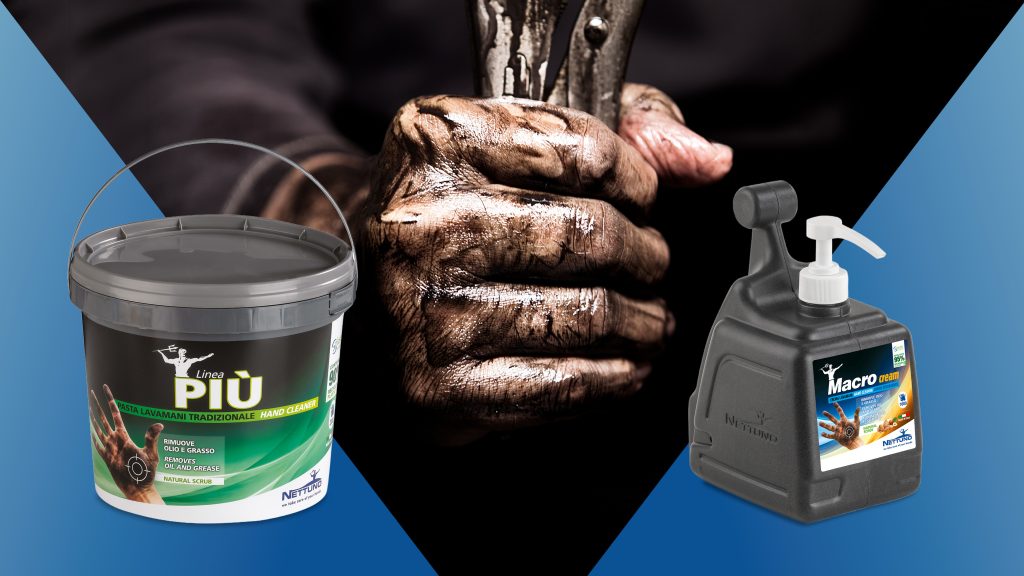
Hand cleaner paste has been a workshop staple for generations and remains a reliable solution today: Nettuno itself produces well-established, popular pastes such as Linea Più. At the same time, today’s demands for hygiene, skin health and business efficiency are increasingly pushing companies toward a natural transition — from paste to cream.
This guide explains, in practical terms, the differences between paste, cream, gel and extra-fluid, and helps you choose the right product based on the type of soiling, your industry and the way you work.
What is the difference between paste and cream hand cleaner?
The main difference lies in dispensing, pH and composition. Hand cleaner paste is packaged in open tubs or buckets, generally has an alkaline pH (between 9.7 and 10.0), and uses coarse mineral abrasives. Hand cleaner cream is dispensed from a pump or wall dispenser, has a skin-friendly (eudermic) pH close to that of the skin (between 5.5 and 6.7), and is formulated with vegetable or mineral micro-beads plus moisturising agents.
At equal cleaning effectiveness, professional hand cleaner cream delivers three concrete advantages: better hygiene, greater skin protection for workers, and less waste for the business.
5 reasons why hand cleaner cream is the evolution of paste
1. Better hygiene and an end to cross-contamination
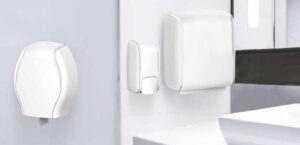
With paste in an open tub, the operator dips their soiled hands directly into the container, introducing bacteria, dirt and moisture that over time compromise the product’s stability. Cream, dispensed from a pump or wall dispenser (such as the T-Wall or Hercules systems), ensures that each operator only touches their own portion — eliminating cross-contamination between colleagues at the source.
2. Precise dosing and less waste
Scooping paste by hand is inherently imprecise: operators tend to dig in with their fingers and take more than needed, with a share ending up wasted down the drain. Pump or automatic cream dispensers, by contrast, deliver a measured amount per wash (often a single dose is enough).
The impact on the numbers is concrete. For the same 5,000 ml format, hand cleaner paste yields around 200 washes, while dispensed cream reaches around 1,670 washes — with a significantly lower cost per wash than paste.
| Product | Format | Number of washes |
| Linea Più hand cleaner paste | 5,000 ml | ~200 |
| Cream (classic/extra-fluid/gel) | 5,000 ml | ~1,670 |
3. Skin care and respect
The high alkaline pH of traditional paste (between 9.7 and 10.0) tends, with daily use, to strip the skin’s natural hydrolipidic film, promoting dryness, cracking and occupational dermatitis. Nettuno’s hand cleaner creams, such as Macrocream, have a physiological, skin-friendly pH (5.5–6.7) and are enriched with high-quality moisturising, emollient and nourishing agents, including sericin (a silk protein found in La Rossa in Crema). Skin stays supple and healthy even after many washes throughout the day.
4. Safer pipes and plumbing systems
The heavy, coarse mineral abrasives in traditional paste, with repeated use by many operators, build up in sink traps, where they harden and clog drains. Nettuno’s creams are fluid and use ultra-light vegetable or mineral micro-beads, which flow easily through pipework and protect the plumbing system.
5. Optimal cleaning action with a clinging effect
The rich, dense texture of Nettuno’s creams clings to dry skin (the so-called “clinging” or adhesive effect). This allows the operator to rub in and emulsify the dirt thoroughly before adding water, so the surfactants dissolve grease and oil effectively from the very first application.
In this sense, the paste represents a more traditional and economical solution, while those seeking an approach more attentive to skin health can turn to hand cleaner creams, now available in various formulas and textures designed to meet different washing needs.
Cream, extra-fluid cream or gel? How to choose the right hand cleaner
At Nettuno, there is no single “best” solution overall: each category answers specific needs, defined by the type of soiling, working style and industry. Here’s how to find your way.
Hand cleaner cream (Macrocream)
Profile: a rich, creamy, dense formula based on gentle surfactants, moisturising agents and very fine vegetable micro-beads, with a eudermic pH of 5.5.
Strengths: excellent skin protection, deep hydration, ideal for frequent use throughout the day. The vegetable micro-beads (almond and hazelnut shells) are also fully biodegradable.
Type of soiling: heavy mechanical and industrial soiling (oil, grease, hydrocarbons, bitumen, graphite, rust).
Key industries: tyre fitters, carpenters/window and door fitters, construction workers, farmers and gardeners.
Gel hand cleaners (La Rossa in Gel)
Profile: gel consistency, boosted with highly skin-tolerant solvents (often naturally derived) and calibrated abrasive mineral micro-beads such as pumice stone, with a pH around 6.0.
Strengths: strong detaching and penetrating power, able to break down film-forming molecules stuck to the skin.
Type of soiling: adhesives, paints, varnishes, acrylic or polyurethane resins, sealants, silicones, polyurethane foam and tar.
Key industries: body shops, house painters and decorators, carpenters and window/door fitters working with structural adhesives or wood protectives.
Extra-fluid hand cleaner creams (Linea Blanca Extrafluida and La Rossa in Crema)
Profile: fluid formulations enriched with natural emollients — olive extract for Linea Blanca Extrafluida, sericin for La Rossa in Crema — and very fine mineral micro-beads, optimised for fast flow through professional dispensers.
Strengths: instant dispensing, exceptional spreadability and very quick, residue-free rinsing, to optimise washing time while keeping effectiveness high.
Type of soiling: medium-to-heavy industrial and mechanical soiling (grease, oil, metal dust, lubricants, hydrocarbons, bitumen, rust, graphite, carbon black).
Key industries:
- Linea Blanca Extrafluida – Tyre fitters, auto electricians/electricians, metalworkers, carpenters/window and door fitters: fast removal of hydrocarbons, graphite and rust without drying out skin during frequent end-of-shift washes.
- La Rossa in Crema – Mechanics, blacksmiths/metalworkers, shipbuilders: effective on heavy industrial soiling, with the added softness provided by sericin.
Summary table: cream, gel and extra-fluid
| Category | Reference product | Type of soiling | Key industry | Distinctive feature |
| Cream | Macrocream | Grease, oil, lubricants, rust, graphite, bitumen | Tyre fitters, carpenters/window and door fitters, construction workers, farmers/gardeners | pH 5.5, vegetable micro-beads, deep eudermic care |
| Gel | La Rossa in Gel | Paints, varnishes, adhesives, resins, sealants, silicones, tar, grease, oil, hydrocarbons | Body shops, carpenters/window and door fitters, construction workers, painters/decorators | Targeted solvents, immediate degreasing power, mineral micro-beads |
| Extra-fluid | Linea Blanca Extrafluida, La Rossa in Crema | Grease, oil, lubricants, hydrocarbons, rust, graphite | Linea Blanca Extrafluida · Tyre fitters, auto electricians/electricians, metalworkers, carpenters/window and door fitters. La Rossa in Crema · Mechanics, blacksmiths/metalworkers, shipbuilders | Maximum flowability, ultra-fast dispensing, quick rinse |
The Nettungel Orange case: a gel for heavy soiling
Nettungel Orange deserves a special note. It is physically a gel (orange, translucent, citrus-scented), with exceptional degreasing power on oils, grease and diesel. It is also useful for removing special dirt and adhesives, such as glues and fresh paint.
This raises a common question: for the same heavy workshop soiling, is Macrocream cream or Nettungel Orange gel the better choice?
Macrocream or Nettungel Orange: how to choose
Choose Macrocream if you work with:
- Sensitive or dry skin: an ultra-gentle action that deeply nourishes and hydrates thanks to its pH of 5.5 and rich emollient profile.
- Need for gentle scrubbing: soft mechanical action from biodegradable micro-beads made from hazelnut and almond shells.
- Extreme washing frequency: ideal for those who wash their hands dozens of times a day and want to constantly protect the skin barrier.
Choose Nettungel Orange if you work with:
- Persistent odours: diesel, hydrocarbons, solvents and fuels, neutralised by the degreasing and fragrancing power of orange extract.
- Deep-pore dirt: precise mineral scrub that removes soot deep down.
- Need for speed: the fresh gel texture glides instantly onto skin and rinses off extremely quickly.
Summary table: the two gels compared
| Category | Product | Type of soiling | Key industry | Distinctive feature |
| Gel (odour control) | Nettungel Orange | Heavy grease, engine oil, lubricants, diesel, hydrocarbons | Mechanical workshops, tyre fitters, engine specialists, heavy vehicle maintenance | Eliminates fuel odours and leaves an orange scent. Fast-acting gel |
| Gel (special) | La Rossa in Gel | Paints, varnishes, resins, adhesives, silicones, sealants, inks | Body shops, painters, decorators, carpenters (adhesive work) | Highly tolerable targeted solvents to dissolve resins and paint |
From paste to cream: the future of hand hygiene
Switching from paste to cream means combining three goals in a single daily gesture: protecting workers’ skin health, reducing waste, and protecting plumbing systems. Whether it’s cream, gel or extra-fluid, the choice always starts with the type of soiling and the industry.
To find the solution best suited to your business, and to evaluate the most efficient dispenser system for your workshop or plant, contact the Nettuno team for dedicated consultancy.